KnowWaste
  • About
    • About us
    • Experts
  • Marine Debris
    • Data
    • Good Practices
    • Policy
    • E-learning
    • 3RProMAR Reports
    • Technology
    • Calculator
  • News
  • Topic
    • Waste Data
    • Thematic Area
  • Publications
  • Contact
  • Search

News

  1. Marine Debris
  2. News
Latest News

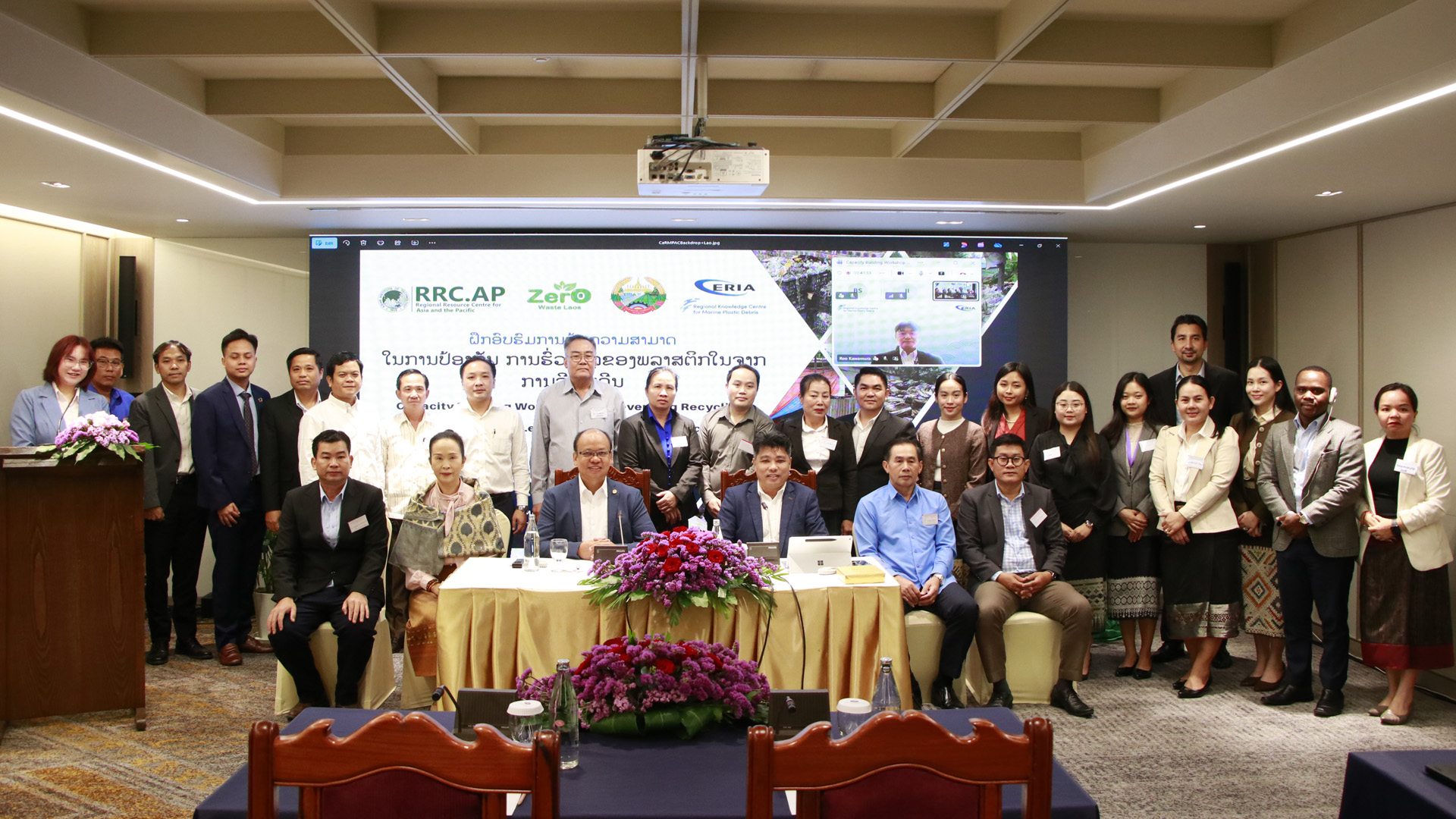
AIT RRC.AP and Lao PDR Department of Environment Conduct CaRMPAC Workshop on Preventing Plastic Leakage in Vientiane

18 May 2026
Lao PDR

The Regional Resource Centre for Asia and the Pacific at the Asian Institute of Technology (AIT RRC.AP), in collaboration with the Department of Environment, Ministry of Agriculture and Environment of Lao PDR, and with support from the Economic Research Institute for ASEAN and East Asia Regional Knowledge Centre for Marine Plastic Debris (ERIA RKC-MPD), conducted the Capacity Building Workshop on Preventing Recycling-Related Plastic Leakage from Plastic Recycling in Vientiane, Lao PDR, on 18-19 May 2026 under the CaRMPAC Project.

The workshop brought together representatives from government agencies, local authorities, recycling-related stakeholders, and environmental practitioners to strengthen understanding of how plastic leakage can occur across recycling activities and how practical measures can help prevent plastic waste from leaking in the environment. The programme forms part of the Capacity Building Programme for Reducing Recycling-Related Marine Plastic Pollution in ASEAN Cities, implemented across 12 cities in seven ASEAN Member States.

The opening session featured remarks from Mr. Aloune Sayavong, Deputy Director General of the Department of Environment, Ministry of Agriculture and Environment of Lao PDR, followed by remarks from Dr. Guilberto Borongan, Director of AIT RRC.AP, and Mr. Reo Kawamura, Director of ERIA RKC-MPD.

Throughout the two-day workshop, participants discussed plastic leakage pathways across the recycling value chain, including household waste handling, informal collection, junk shops, material recovery facilities, and mechanical recycling operations. The sessions highlighted that while recycling supports waste reduction, resource recovery, livelihoods, and circular economy goals, poorly managed collection, sorting, storage, washing, transport, and processing activities can allow plastic fragments and residues to leak into drainage systems, open land, rivers, and the wider environment.

The workshop also covered practical approaches for preventing leakage from recycling facilities, including improved sorting and storage, better containment systems, regular cleaning, safer workplace practices, and simple operational improvements. Sessions further addressed occupational health and safety, behaviour change, community participation, and the importance of connecting policy, technical knowledge, and local experience.

Through interactive discussions and solution-mapping exercises, participants explored locally appropriate measures to strengthen recycling systems and reduce leakage risks in Vientiane and beyond. Through the CaRMPAC initiative, AIT RRC.AP continues to support ASEAN cities in strengthening capacity, promoting practical solutions, and advancing regional collaboration to reduce marine plastic pollution. 
Read More →
Latest News

AIT RRC.AP and Local Authorities Advance Practical Dialogue on Plastic Leakage Prevention in Luang Prabang

21 May 2026
Lao PDR

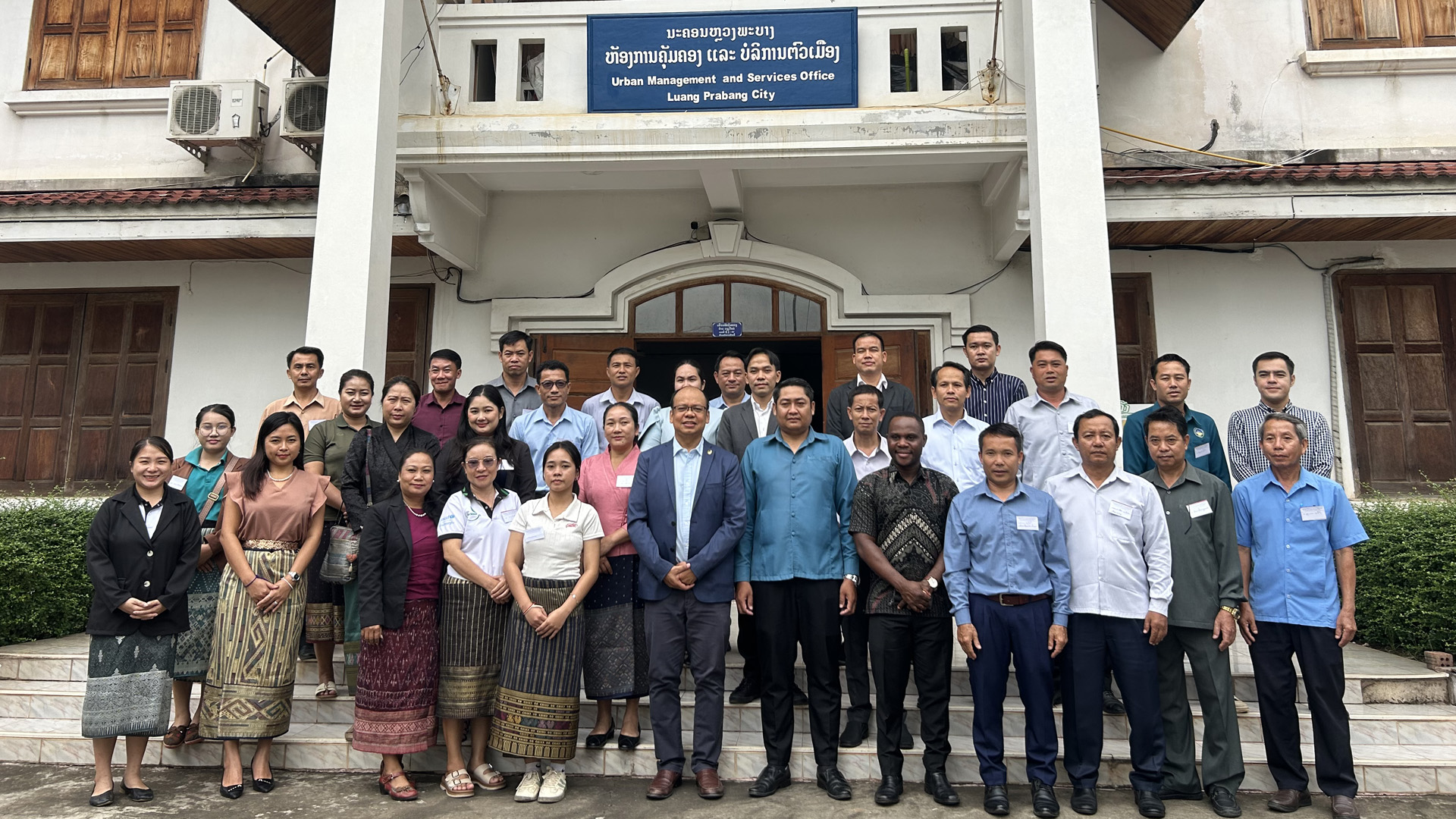
The Regional Resource Centre for Asia and the Pacific, Asian Institute of Technology (AIT RRC.AP), in collaboration with the Department of Environment, Ministry of Agriculture and Environment of Lao PDR, Zero Waste Laos, Urban Management and Services Office (VCOM), Luang Prabang City and with support from the Economic Research Institute for ASEAN and East Asia, Regional Knowledge Centre for Marine Plastic Debris (ERIA RKC-MPD), conducted the Capacity Building Workshop on Preventing Recycling-Related Plastic Leakage from Plastic Recycling and hosted by VCOM, Luang Prabang City, Lao PDR, 21-22 May 2026 under the CaRMPAC Project.

The workshop brought together participants from government agencies, waste management and recycling-related sectors, local communities, and other relevant stakeholders. The opening session was opened by Mr. Khamphet Thammavong, Deputy Director of VCOM of Luang Prabang, Mr.Khadtiya Vanhnasack, Deputy Director General of the Department of Agriculture and Environment of Luang Prabang; Dr.Guilberto Borongan, Director of AIT RRC.AP; and Mr. Reo Kawamura, Director of ERIA RKC-MPD. In their remarks, the speakers highlighted the importance of translating regional knowledge from the CaRMPAC initiative into practical local action, particularly for Luang Prabang as a UNESCO World Heritage City and major tourism destination where environmental quality is closely linked to cultural identity, community well-being, and the local economy.

Over the two days, participants examined how plastic leakage may occur across the recycling value chain, from household handling and informal collection to junk shops, transport, storage, and recycling operations. The discussions emphasized that recycling remains an important part of waste reduction and circular economy efforts, but that leakage can occur when sorting, storage, washing, processing, and residue handling are not properly managed.

A key feature of the Luang Prabang workshop was its strong focus on local problem-solving. Participants discussed challenges specific to local waste systems, including limited market connectivity for recyclable materials, declining participation of middlemen, transportation costs, irregular collection, low-value plastics, and the difficulty of sustaining recycling activities in areas where recyclable volumes are limited. These issues were explored not only as technical problems, but also as ecosystem challenges requiring coordination among local authorities, recycling businesses, waste collectors, communities, schools, temples, markets, and tourism-related actors.

Following the behaviour change session on the second day, participants worked in groups to identify practical solutions for improving waste separation, strengthening awareness, supporting recycling enterprises, and improving cooperation between policy makers, consumers, and small-scale recycling actors. The group presentations reflected local priorities such as public education, clearer responsibilities, improved collection systems, practical infrastructure support, and stronger coordination between communities and local authorities.

The workshop also introduced participants to behaviour change approaches, including the importance of enabling environments, incentives, social norms, and locally appropriate communication. Discussions highlighted that awareness alone may not be sufficient unless people are provided with practical systems, convenient options, and visible examples that make proper waste handling easier to adopt.

Through interactive discussions and group exercises, the Luang Prabang workshop created a platform for participants to connect technical knowledge with local realities. The activity reinforced that preventing plastic leakage requires not only better infrastructure and recycling practices, but also cooperation, behaviour change, market linkages, and locally led solutions.

Through the CaRMPAC initiative, AIT RRC.AP continues to support ASEAN cities in strengthening local capacity, promoting practical actions, and advancing regional collaboration to reduce recycling-related plastic leakage and marine plastic pollution.
Read More →
Latest News

Capacity Building Workshop on Preventing Recycling-Related Plastic Leakage from Plastic Recycling in Bali

21 April 2026
Indonesia

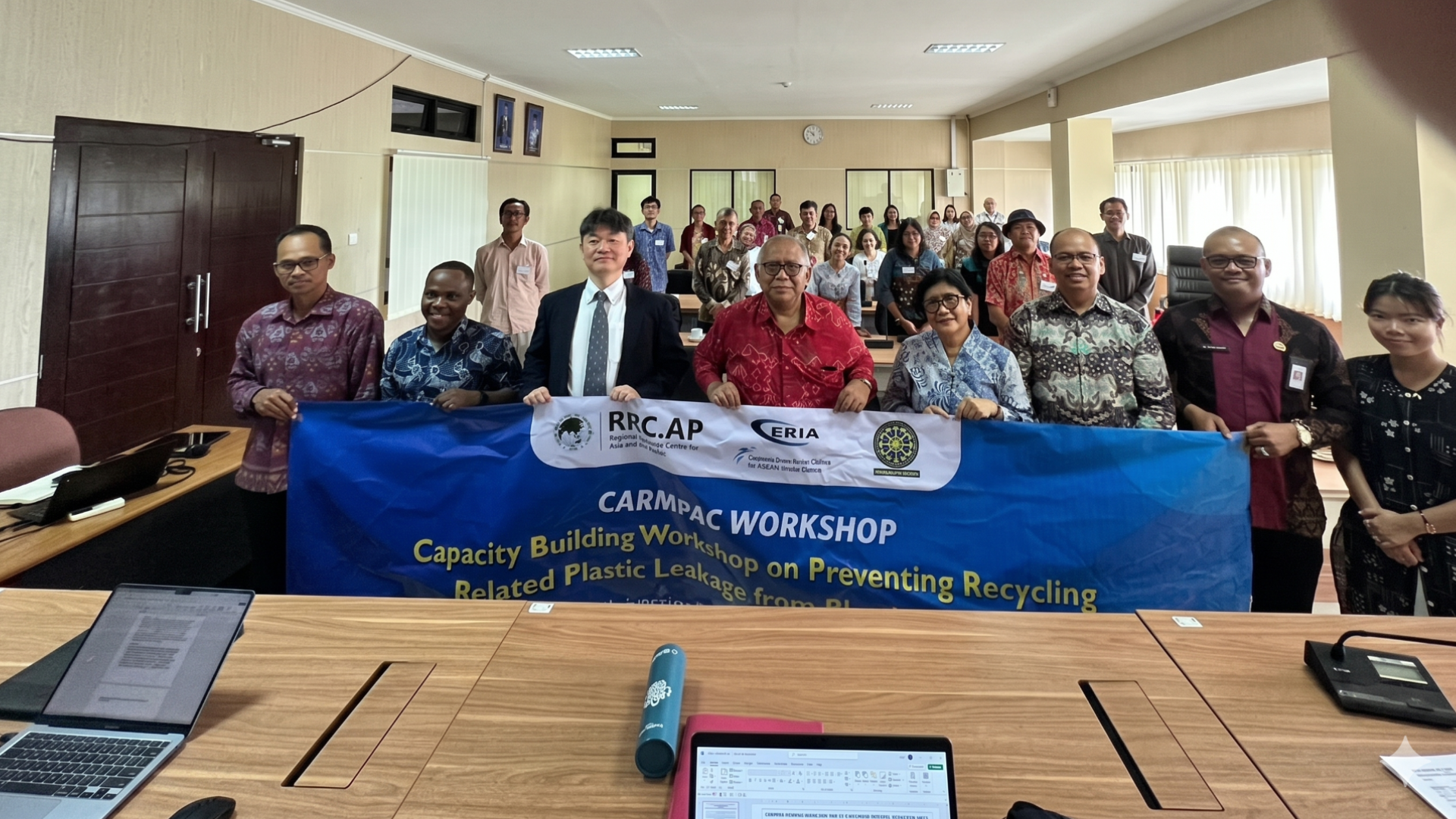
The Regional Resource Centre for Asia and the Pacific at the Asian Institute of Technology (AIT RRC.AP), in collaboration with Udayana University and with support from the Economic Research Institute for ASEAN and East Asia – Regional Knowledge Centre for Marine Plastic Debris (ERIA RKC-MPD), successfully conducted the Capacity Building Workshop on Preventing Recycling-Related Plastic Leakage from Plastic Recycling in Bali, Indonesia, on 21–22 April 2026 under the CaRMPAC Project. The workshop was held at the Udayana University Senate Meeting Room in Denpasar, Bali, Indonesia.

The workshop brought together representatives from government agencies, academia, recycling businesses, NGOs, and the private sector to strengthen knowledge and regional collaboration on reducing plastic leakage from recycling systems. The workshop is part of the Capacity Building Programme for Reducing Recycling-Related Marine Plastic Pollution in ASEAN Cities (CaRMPAC), which is being implemented across 12 cities in seven ASEAN Member States.

The opening session featured remarks from Dr. Guilberto Borongan, Director of AIT RRC.AP, and Mr. Reo Kawamura, Director of ERIA RKC-MPD and Prof. Agung Suryawan Wiranatha, Director of Centre of Excellence in Tourism - on behalf of the Rector Udayana University.

Discussions during the workshop highlighted the growing challenges of plastic pollution and recycling-related leakage in Bali. Participants emphasized that while recycling plays an important role in reducing waste, leakage can still occur due to inadequate waste segregation, high logistics costs, limited recycling infrastructure, and weak operational systems. Discussions also highlighted the need for stronger coordination, clearer operational procedures, and improved infrastructure to support recycling facilities and waste management systems. 

Interactive sessions explored behavioral change approaches, policy measures, and practical interventions to reduce plastic leakage. Participants also discussed examples of community-based waste management initiatives in Bali, while recognizing the continuing challenge of increasing waste generation despite ongoing improvement efforts.

As part of the workshop, a field visit to “Get Plastic Indonesia” in Bali to observe local recycling operations and discuss practical challenges and opportunities related to plastic leakage prevention.

AIT RRC.AP, through initiatives like CaRMPAC, continues to support ASEAN cities in strengthening capacities, promoting practical solutions, and advancing regional collaboration to address marine plastic pollution.

Read More →
...
Latest News

AIT RRC.AP and Lao PDR Department of Environment Conduct CaRMPAC Workshop on Preventing Plastic Leakage in Vientiane

Lao PDR
Start Reading →
...
Latest News

AIT RRC.AP and Local Authorities Advance Practical Dialogue on Plastic Leakage Prevention in Luang Prabang

Lao PDR
Start Reading →
...
Latest News

Capacity Building Workshop on Preventing Recycling-Related Plastic Leakage from Plastic Recycling in Bali

Indonesia
Start Reading →

All News

AIT RRC.AP and Lao PDR Department of Environment Conduct CaRMPAC Workshop on Preventing Plastic Leakage in Vientiane
Lao PDR

The Regional Resource Centre for Asia and the Pacific at the Asian Institute of Technology (AIT RRC.AP), in collaboration with the Department of Environment, Ministry of Agriculture and Environment of Lao PDR, and with support from the Economic Research Institute for ASEAN and East Asia Regional Knowledge Centre for Marine Plastic Debris (ERIA RKC-MPD), conducted the Capacity Building Workshop on Preventing Recycling-Related Plastic Leakage from Plastic Recycling in Vientiane, Lao PDR, on 18-19 May 2026 under the CaRMPAC Project.

The workshop brought together representatives from government agencies, local authorities, recycling-related stakeholders, and environmental practitioners to strengthen understanding of how plastic leakage can occur across recycling activities and how practical measures can help prevent plastic waste from leaking in the environment. The programme forms part of the Capacity Building Programme for Reducing Recycling-Related Marine Plastic Pollution in ASEAN Cities, implemented across 12 cities in seven ASEAN Member States.

The opening session featured remarks from Mr. Aloune Sayavong, Deputy Director General of the Department of Environment, Ministry of Agriculture and Environment of Lao PDR, followed by remarks from Dr. Guilberto Borongan, Director of AIT RRC.AP, and Mr. Reo Kawamura, Director of ERIA RKC-MPD.

Throughout the two-day workshop, participants discussed plastic leakage pathways across the recycling value chain, including household waste handling, informal collection, junk shops, material recovery facilities, and mechanical recycling operations. The sessions highlighted that while recycling supports waste reduction, resource recovery, livelihoods, and circular economy goals, poorly managed collection, sorting, storage, washing, transport, and processing activities can allow plastic fragments and residues to leak into drainage systems, open land, rivers, and the wider environment.

The workshop also covered practical approaches for preventing leakage from recycling facilities, including improved sorting and storage, better containment systems, regular cleaning, safer workplace practices, and simple operational improvements. Sessions further addressed occupational health and safety, behaviour change, community participation, and the importance of connecting policy, technical knowledge, and local experience.

Through interactive discussions and solution-mapping exercises, participants explored locally appropriate measures to strengthen recycling systems and reduce leakage risks in Vientiane and beyond. Through the CaRMPAC initiative, AIT RRC.AP continues to support ASEAN cities in strengthening capacity, promoting practical solutions, and advancing regional collaboration to reduce marine plastic pollution. 

Start Reading →
AIT RRC.AP and Local Authorities Advance Practical Dialogue on Plastic Leakage Prevention in Luang Prabang
Lao PDR

The Regional Resource Centre for Asia and the Pacific, Asian Institute of Technology (AIT RRC.AP), in collaboration with the Department of Environment, Ministry of Agriculture and Environment of Lao PDR, Zero Waste Laos, Urban Management and Services Office (VCOM), Luang Prabang City and with support from the Economic Research Institute for ASEAN and East Asia, Regional Knowledge Centre for Marine Plastic Debris (ERIA RKC-MPD), conducted the Capacity Building Workshop on Preventing Recycling-Related Plastic Leakage from Plastic Recycling and hosted by VCOM, Luang Prabang City, Lao PDR, 21-22 May 2026 under the CaRMPAC Project.

The workshop brought together participants from government agencies, waste management and recycling-related sectors, local communities, and other relevant stakeholders. The opening session was opened by Mr. Khamphet Thammavong, Deputy Director of VCOM of Luang Prabang, Mr.Khadtiya Vanhnasack, Deputy Director General of the Department of Agriculture and Environment of Luang Prabang; Dr.Guilberto Borongan, Director of AIT RRC.AP; and Mr. Reo Kawamura, Director of ERIA RKC-MPD. In their remarks, the speakers highlighted the importance of translating regional knowledge from the CaRMPAC initiative into practical local action, particularly for Luang Prabang as a UNESCO World Heritage City and major tourism destination where environmental quality is closely linked to cultural identity, community well-being, and the local economy.

Over the two days, participants examined how plastic leakage may occur across the recycling value chain, from household handling and informal collection to junk shops, transport, storage, and recycling operations. The discussions emphasized that recycling remains an important part of waste reduction and circular economy efforts, but that leakage can occur when sorting, storage, washing, processing, and residue handling are not properly managed.

A key feature of the Luang Prabang workshop was its strong focus on local problem-solving. Participants discussed challenges specific to local waste systems, including limited market connectivity for recyclable materials, declining participation of middlemen, transportation costs, irregular collection, low-value plastics, and the difficulty of sustaining recycling activities in areas where recyclable volumes are limited. These issues were explored not only as technical problems, but also as ecosystem challenges requiring coordination among local authorities, recycling businesses, waste collectors, communities, schools, temples, markets, and tourism-related actors.

Following the behaviour change session on the second day, participants worked in groups to identify practical solutions for improving waste separation, strengthening awareness, supporting recycling enterprises, and improving cooperation between policy makers, consumers, and small-scale recycling actors. The group presentations reflected local priorities such as public education, clearer responsibilities, improved collection systems, practical infrastructure support, and stronger coordination between communities and local authorities.

The workshop also introduced participants to behaviour change approaches, including the importance of enabling environments, incentives, social norms, and locally appropriate communication. Discussions highlighted that awareness alone may not be sufficient unless people are provided with practical systems, convenient options, and visible examples that make proper waste handling easier to adopt.

Through interactive discussions and group exercises, the Luang Prabang workshop created a platform for participants to connect technical knowledge with local realities. The activity reinforced that preventing plastic leakage requires not only better infrastructure and recycling practices, but also cooperation, behaviour change, market linkages, and locally led solutions.

Through the CaRMPAC initiative, AIT RRC.AP continues to support ASEAN cities in strengthening local capacity, promoting practical actions, and advancing regional collaboration to reduce recycling-related plastic leakage and marine plastic pollution.

Start Reading →
Capacity Building Workshop on Preventing Recycling-Related Plastic Leakage from Plastic Recycling in Bali
Indonesia

The Regional Resource Centre for Asia and the Pacific at the Asian Institute of Technology (AIT RRC.AP), in collaboration with Udayana University and with support from the Economic Research Institute for ASEAN and East Asia – Regional Knowledge Centre for Marine Plastic Debris (ERIA RKC-MPD), successfully conducted the Capacity Building Workshop on Preventing Recycling-Related Plastic Leakage from Plastic Recycling in Bali, Indonesia, on 21–22 April 2026 under the CaRMPAC Project. The workshop was held at the Udayana University Senate Meeting Room in Denpasar, Bali, Indonesia.

The workshop brought together representatives from government agencies, academia, recycling businesses, NGOs, and the private sector to strengthen knowledge and regional collaboration on reducing plastic leakage from recycling systems. The workshop is part of the Capacity Building Programme for Reducing Recycling-Related Marine Plastic Pollution in ASEAN Cities (CaRMPAC), which is being implemented across 12 cities in seven ASEAN Member States.

The opening session featured remarks from Dr. Guilberto Borongan, Director of AIT RRC.AP, and Mr. Reo Kawamura, Director of ERIA RKC-MPD and Prof. Agung Suryawan Wiranatha, Director of Centre of Excellence in Tourism - on behalf of the Rector Udayana University.

Discussions during the workshop highlighted the growing challenges of plastic pollution and recycling-related leakage in Bali. Participants emphasized that while recycling plays an important role in reducing waste, leakage can still occur due to inadequate waste segregation, high logistics costs, limited recycling infrastructure, and weak operational systems. Discussions also highlighted the need for stronger coordination, clearer operational procedures, and improved infrastructure to support recycling facilities and waste management systems. 

Interactive sessions explored behavioral change approaches, policy measures, and practical interventions to reduce plastic leakage. Participants also discussed examples of community-based waste management initiatives in Bali, while recognizing the continuing challenge of increasing waste generation despite ongoing improvement efforts.

As part of the workshop, a field visit to “Get Plastic Indonesia” in Bali to observe local recycling operations and discuss practical challenges and opportunities related to plastic leakage prevention.

AIT RRC.AP, through initiatives like CaRMPAC, continues to support ASEAN cities in strengthening capacities, promoting practical solutions, and advancing regional collaboration to address marine plastic pollution.

Start Reading →
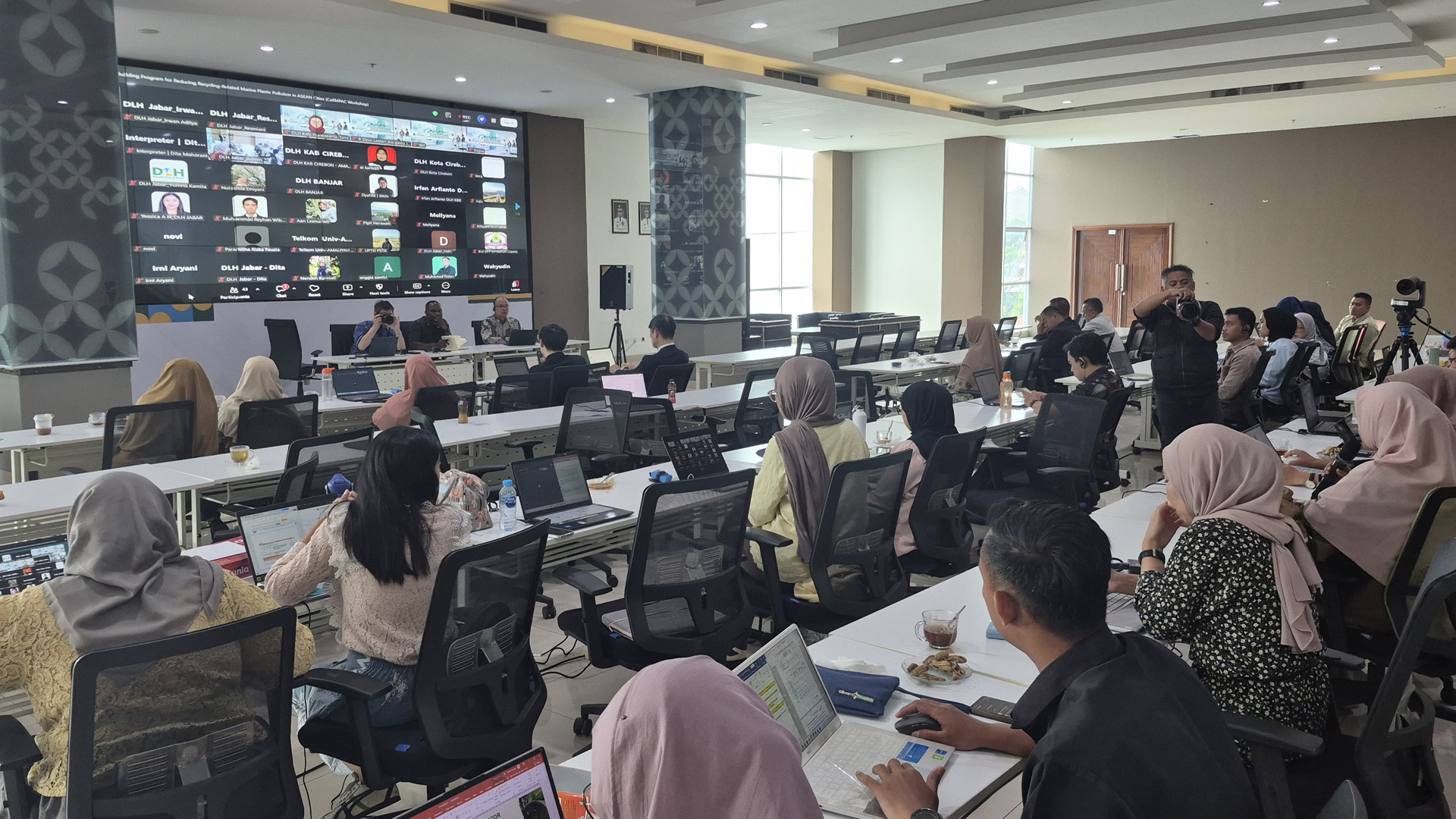
AIT RRC.AP and West Java Environmental Agency Conduct CaRMPAC Workshop on Preventing Plastic Leakage in Bandung
Indonesia

The Regional Resource Centre for Asia and the Pacific (AIT RRC.AP), in collaboration with the Environmental Agency of West Java Province (DLH Jawa Barat) and with support from the Economic Research Institute for ASEAN and East Asia – Regional Knowledge Centre for Marine Plastic Debris (ERIA RKC-MPD), successfully conducted the Capacity Building Workshop on Preventing Recycling-Related Plastic Leakage from Plastic Recycling in Bandung, Indonesia, on 23-24 April 2026 under the CaRMPAC Project.

 
The workshop brought together representatives from government agencies, academia, waste banks, recycling businesses, NGOs, and environmental practitioners across West Java to strengthen understanding and collaboration on preventing plastic leakage from recycling activities. The programme forms part of the Capacity Building Programme for Reducing Recycling-Related Marine Plastic Pollution in ASEAN Cities (CaRMPAC), which is being implemented across 12 cities in seven ASEAN Member States.


The opening session featured remarks from Helmi Gunawan, Secretary of the West Java Province Environmental Agency (DLH Jawa Barat), followed by remarks from Dr. Guilberto Borongan, Director of AIT RRC.AP, and Mr. Reo? Kawamura, Director of ERIA RKC-MPD.

During the session, Ms. Resmiani, Head of the Environmental Pollution Control Division of DLH West Java also delivered a presentation on the current state of waste management in West Java, highlighting challenges related to plastic waste generation, unmanaged waste, microplastic pollution in rivers and coastal areas, and the need for stronger waste management systems and leakage prevention measures.

  
Interactive sessions explored behavioral change approaches, policy measures, and practical interventions to reduce plastic leakage. Participants also discussed examples of community-based waste management initiatives in Bali, while recognizing the continuing challenge of increasing waste generation despite ongoing improvement efforts.

  
Throughout the workshop, participants discussed how recycling activities themselves can become sources of plastic leakage if facilities lack adequate containment systems, operational standards, and environmental safeguards. Challenges highlighted included outdated recycling equipment, open storage systems, poor waste segregation practices, and insufficient wastewater management in recycling operations. Participants emphasized the importance of strengthening operational standards, occupational health and safety, and infrastructure to reduce leakage risks from both formal and informal recycling systems.

The workshop also explored behavioral change approaches and community-based waste management practices. Discussions highlighted that education alone is often insufficient without an enabling environment, accessible infrastructure, and active public participation. Participants shared local initiatives such as digital waste collection systems, village-level waste bank programmes, reusable tumbler campaigns, and community-based waste segregation efforts that are being implemented across West Java.

Interactive discussions further examined policy measures, Extended Producer Responsibility (EPR), upstream waste reduction strategies, and the importance of collaboration among government, communities, academia, and the private sector. Participants also stressed the need for stronger enforcement, improved public awareness, and practical solutions tailored to local contexts in Indonesia.

Through the CaRMPAC initiative, AIT RRC.AP continues to support ASEAN cities in strengthening capacities, promoting practical solutions, and advancing regional collaboration to address marine plastic pollution.

Start Reading →
Khon Kaen Strengthens Capacity to Prevent Recycling-Related Plastic Leakage Under CaRMPAC Programme
Thailand

The Asian Institute of Technology Regional Resource Centre for Asia and the Pacific (AIT RRC.AP), with support from the ERIA Regional Knowledge Centre for Marine Plastic Debris (RKC-MPD) and in coordination with the ASEAN Secretariat, successfully held the Capacity Building Workshop on Preventing Recycling-Related Plastic Leakage under the CaRMPAC Programme in Khon Kaen, Thailand. The workshop forms part of a broader regional effort to address marine plastic pollution by equipping local governments, recyclers, and industry actors with practical tools to minimise plastic and pellet leakage from both formal and informal recycling systems.

Turning Local Challenges into Practical Solutions

Opening remarks were delivered by Hon. Ms. Nutchareewan Dondeeloet, Vice Mayor of Khon Kaen City Municipality; Dr. Guilberto Borongan, Director of AIT RRC.AP; and Mr. Reo Kawamura, Director of ERIA RKC-MPD. Speakers emphasised that marine plastic pollution has evolved into a systemic environmental, economic, and public health challenge that requires coordinated, facility-level action rather than policy commitments alone. Technical sessions grounded the discussions in Khon Kaen’s waste realities. The city generates roughly 210 tonnes of solid waste daily, with low levels of source segregation and persistent operational constraints. Provincial authorities highlighted Thailand’s transition toward a circular economy, including early development of Extended Producer Responsibility (EPR), while noting that low-value plastics continue to pose significant leakage risks.

Strengthening Technical Capacity to Reduce Leakage

Participants explored the full recycling value chain to understand how plastics escape the system, from collection and sorting to washing, shredding, and transport. A key distinction was introduced between plastic loss, which is still recoverable within the system, and leakage, which escapes into the environment and becomes irretrievable. This understanding framed leakage as both an environmental burden and an economic loss for recyclers, especially small-scale operators.


A central technical component of the workshop was the APPCR framework (Anticipate–Prevent–Contain–Correct–Recycle), which provided a structured method for diagnosing and managing leakage risks within recycling operations. Through guided exercises, participants identified facility-level leakage points and discussed low-cost operational improvements such as improved storage, covered work areas, drainage maintenance, and simple water recirculation systems, reinforcing that effective leakage prevention does not always require capital-intensive solutions.?

Governance, Behaviour, and System Alignment

Participants also examined the regulatory and behavioural dimensions of leakage prevention. Discussions highlighted the need for realistic minimum standards for housekeeping, containment, and wastewater management, as well as supportive compliance pathways for SMEs and informal recyclers. Behavioural insights underscored that convenience, social norms, and community values often shape waste practices more strongly than information alone. The workshop emphasised that technological measures must be embedded within aligned institutional, economic, and social systems.

The workshop concluded in a series of role-play and solution-mapping exercises that placed participants in the roles of policymakers, industry actors, and consumers. Policymakers and academics emphasised the importance of coherent standards, certification systems, and incentive-based policy instruments. Industry and MSME representatives highlighted constraints related to financing, space, and technical capacity, proposing approaches such as eco-industrial clustering and modular, on-site technical training. Consumer-focused discussions stressed the need for clear eco-labelling, transparent information, and behavioural incentives to influence purchasing and disposal practices. Across all groups, a strong consensus emerged that only coordinated, multi-actor action—combining effective governance, practical industry solutions, and behavioural change—can realistically prevent plastic leakage.

Courtesy reception by the City Vice Mayor, Waste to Energy Facility and Transfer Station, and Plastic Recycling Facility. The Vice Mayor of the City welcomed the RRCAP, ERIA RKC MPD and Khon Kaen University to the City Administration Office and briefed the team on the status of Plastic Waste management of Khon Kaen City, initiatives and challenges. A visit was made to the ACE Waste Energy Facility, Transfer Station, mechanical plastic recovery facility.

Post-training feedback indicated strong participant satisfaction, with many noting the immediate applicability of the tools and approaches introduced during the workshop. Participants recommended further support through practical checklists, case studies, and modular training tailored to small recyclers and informal facilities.

The Khon Kaen workshop marks another significant step in the CaRMPAC Programme’s mission to translate regional commitments on marine debris into actionable, facility-level improvements. By bringing together municipal authorities, recyclers, policymakers, and industry stakeholders, the event strengthened local capacity to reduce plastic leakage and advance the circular economy transition across ASEAN.


Start Reading →
AIT RRC.AP and GWSC Jointly Organize Regional Workshop on Extended Producer Responsibility in Kuala Lumpur
Malaysia

The Asian Institute of Technology Regional Resource Center for Asia and the Pacific (AIT RRC.AP), in collaboration with the Global Water and Sanitation Center (GWSC), successfully organized a four-day regional workshop on Extended Producer Responsibility (EPR) under the Southeast Asia Regional Program on Combating Marine Plastics (SEA-MaP). Held from 18–21 November 2025 in Kuala Lumpur, Malaysia, the program brought together delegates from ASEAN Member States (AMS) to enhance regional capacity in addressing plastic pollution. 

The workshop forms part of the annual Knowledge Exchange Program (KEP) under SEA-MaP, a World Bank–supported initiative aimed at strengthening the implementation of the ASEAN Regional Action Plan for Combating Marine Debris. This year's focus on EPR reflects growing demand among AMS for practical guidance on designing and operationalizing producer responsibility systems. 

Across two days of intensive training, participants engaged in modules covering the foundations of EPR policy, producer obligations, financial mechanisms, data and monitoring systems, and eco-design. Sessions were delivered by experts from AIT, Chulalongkorn University, Universiti Putra Malaysia, MAREA, and other regional partners. Hands-on activities, including group exercises on developing national EPR action plans, promoted peer learning and cross-country exchange. 

The final two days featured study visits to Ajinomoto Malaysia, the IPC Recycling & Buy-Back Centre, Bukit Tagar Sanitary Landfill, and KDEB Cyberjaya, where participants observed real-world applications of EPR, waste management innovation, and public-private collaboration.  This joint effort by AIT RRC.AP and GWSC marks an important step toward building a more harmonized and effective EPR landscape in ASEAN—supporting the region's transition toward circular economy models and strengthening collective action to combat marine plastic pollution.


Start Reading →
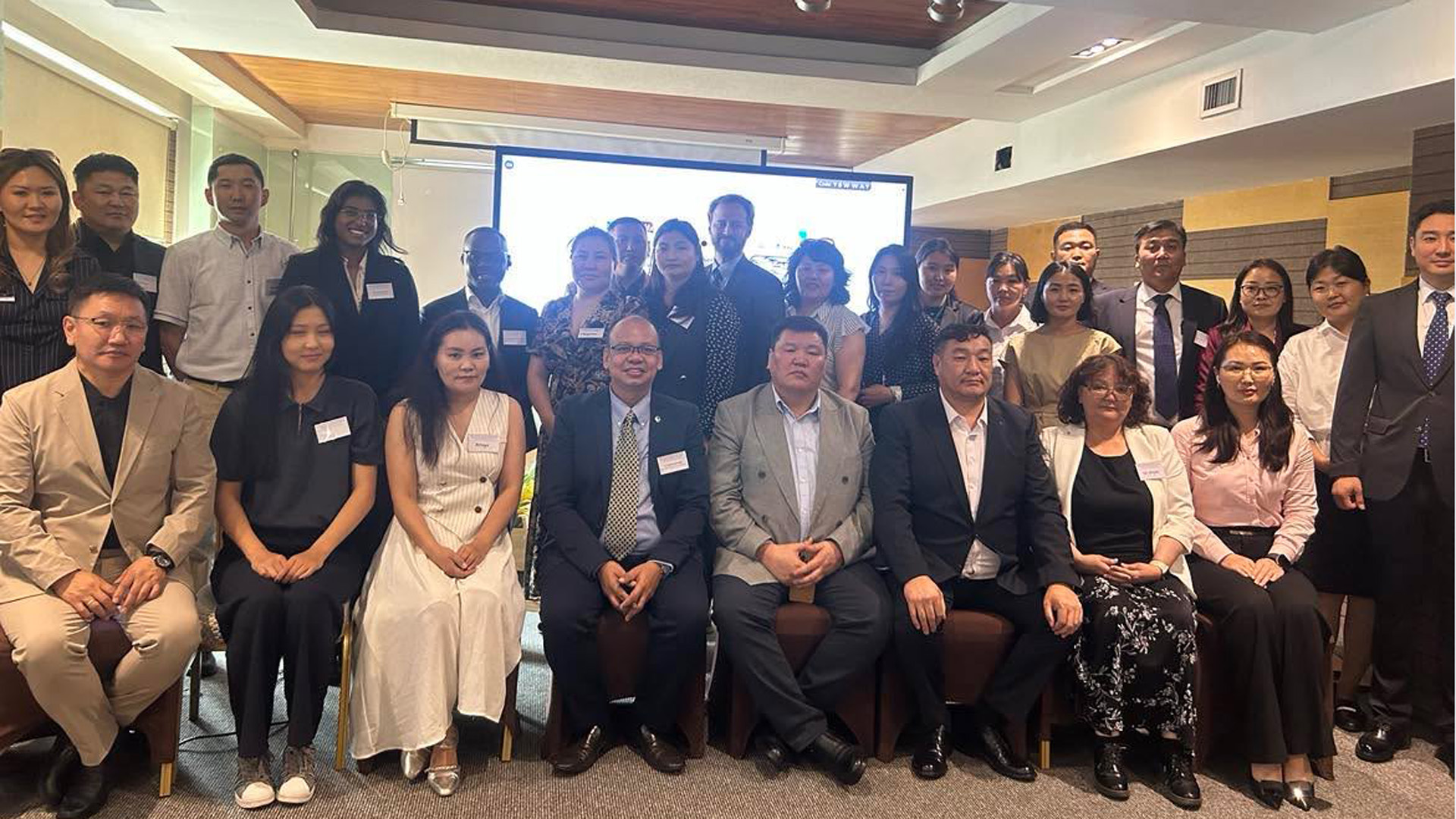
Mongolia Hosts National Training on Strengthening Country-Level Inter-Agency Coordination on Trade of Mercury
Mongolia

A 2-day National Training on Strengthening Country-Level Inter-Agency Coordination on Trade of Mercury was successfully conducted in Ulaanbaatar, Mongolia, bringing together customs officials, environmental regulators, law enforcement officers, and health experts. The workshop was co-organized by the Ministry of Environment and Climate Change of Mongolia (MOECC), the Biodiversity Research Institute (BRI), the Regional Resource Centre for Asia and the Pacific at the Asian Institute of Technology (AIT RRC.AP), and the United Nations Environment Programme (UNEP). This national training forms part of a broader regional initiative to enhance countries' capacities to meet their obligations under the Minamata Convention on Mercury. It emphasized country-specific strategies, inter-agency coordination, and the application of forensic and risk assessment tools to detect and curb illegal mercury trade.

The opening session featured remarks from Mr. Thomas Verbaere, United Nations Environment Programmes (UNEP), Mr. Ts. Urtnasan, the State Secretary of MOECC, Dr. Guilberto Borongan, Director of AIT RRC.AP, and setting the tone for the workshop's objectives and expected outcomes. Experts from the World Health Organization (WHO), World Customs Organization (WCO), BRI and Nexus3 Foundation, along with key national representatives from the Customs Inspector, Quarantine Division, Customs General Administration of Mongolia provided insights into the health impacts of mercury, trade obligations under the Minamata Convention, and practical case experiences from across the Mongolia and the region.

Participants engaged in practical exercises on customs inspections, profiling of mercury shipments, and simulation of joint operations, culminating in discussions on national action planning. A special highlight included Mongolia's mercury mass flow analysis and the presentation of successful experiences from Indonesia and the PlanetGOLD initiative in Mongolia. The training concluded with an open forum to explore next steps in developing Mongolia's national action plan for mercury trade enforcement and half-day field visit to secure mercury storage facility in Ulaanbaatar?.

AIT RCAP team also made a courtesy call and bilateral meetings with Directors of Environmental Policy Implementation, MOECC and the Head of Climate Change Department and Head of Environment Department of Ulaanbaatar City.

Start Reading →
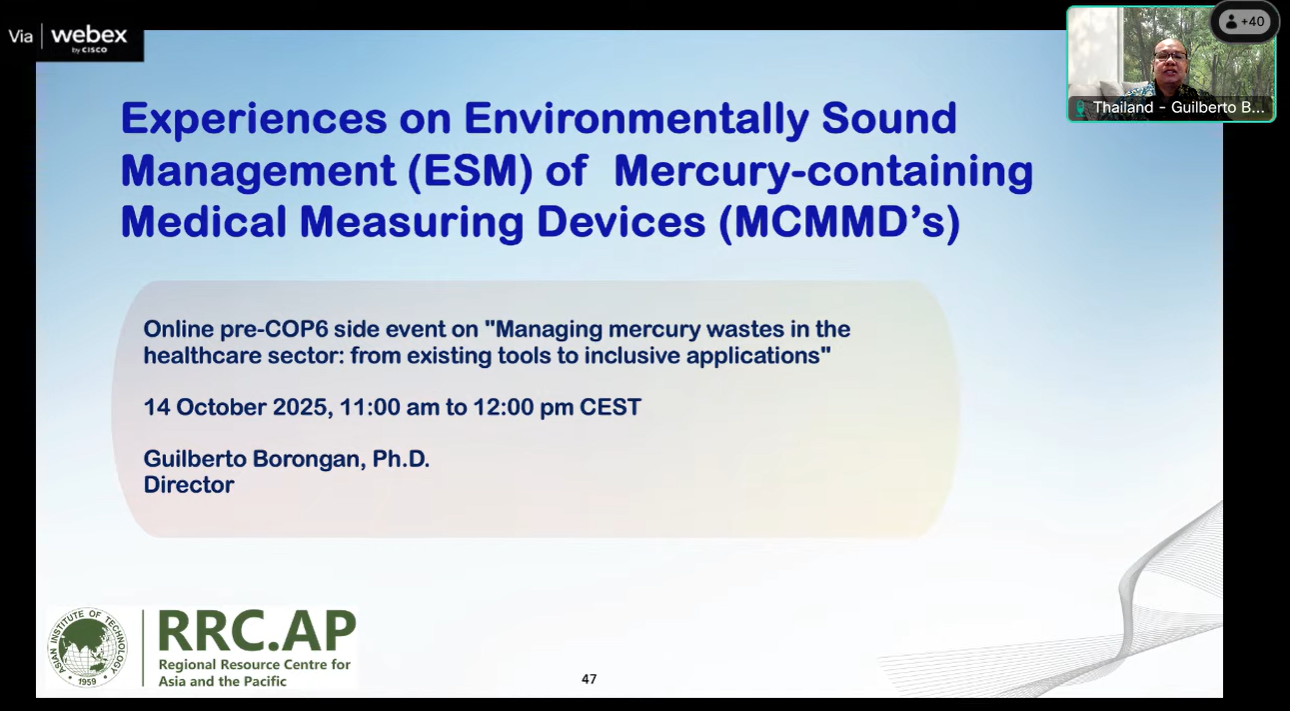
Sharing Regional Experience on Mercury Waste Management in Healthcare Sector
Thailand

Dr. Guilberto Borongan, Director of the Regional Resource Centre for Asia and the Pacific at the Asian Institute of Technology (AIT RRC.AP), Thailand, participated in an online pre-COP6 side event titled “Managing Mercury Wastes in the Healthcare Sector: From Existing Tools to Inclusive Applications” During the 1-hour webinar event, Dr. Borongan delivered a presentation on “Experiences on Environmentally Sound Management (ESM) of Mercury-containing Medical Measuring Devices (MCMMDs)”, where he shared practical insights and regional experiences in advancing safe and sustainable mercury waste practices in the healthcare sector. This event was formed as a part of the preparatory activities leading up to COP6 under the Minamata Convention, highlighting tools, policies, and inclusive approaches for managing mercury in healthcare settings.
 

Watch the full webinar.

Start Reading →
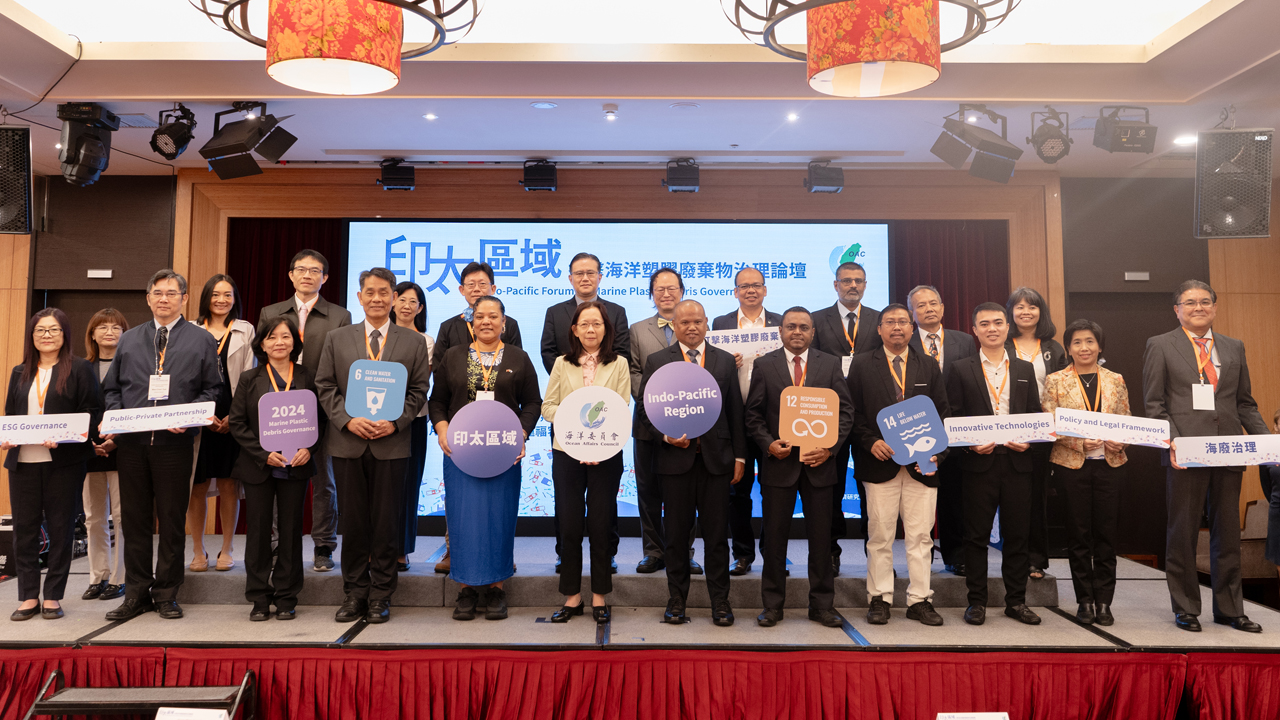
AIT RRC.AP participated in the Indo-Pacific Forum on Marine Plastic Debris Governance
Taiwan

On November 13–14, 2024, AIT RRC.AP participated in the Indo-Pacific Forum on Marine Plastic Debris Governance in Hualien, Taiwan, organized by Taiwan’s Ocean Affairs Council (OAC). The forum advanced the plastic treaty’s momentum in the Indo-Pacific, with OAC committed to sustainable ocean management and tackling key marine environmental challenges. 

The event fostered dialogue and collaboration among Indo-Pacific countries to tackle marine plastic pollution by exploring strategies, sharing best practices, and promoting regional cooperation to address this pressing global challenge.

Dr. Guilberto Borongan, Director of AIT RRC.AP, served as a panel speaker, sharing insights on "Public-Private Partnership in ESG Governance." His presentation addressed Corporate Responsibility and ESG (Environmental, Social, and Governance) strategies in marine plastic governance, emphasizing safer, more durable, reusable, and recyclable plastic designs. He highlighted successful public-private partnerships, the role of social enterprises in ocean governance, and future collaboration opportunities.

Start Reading →
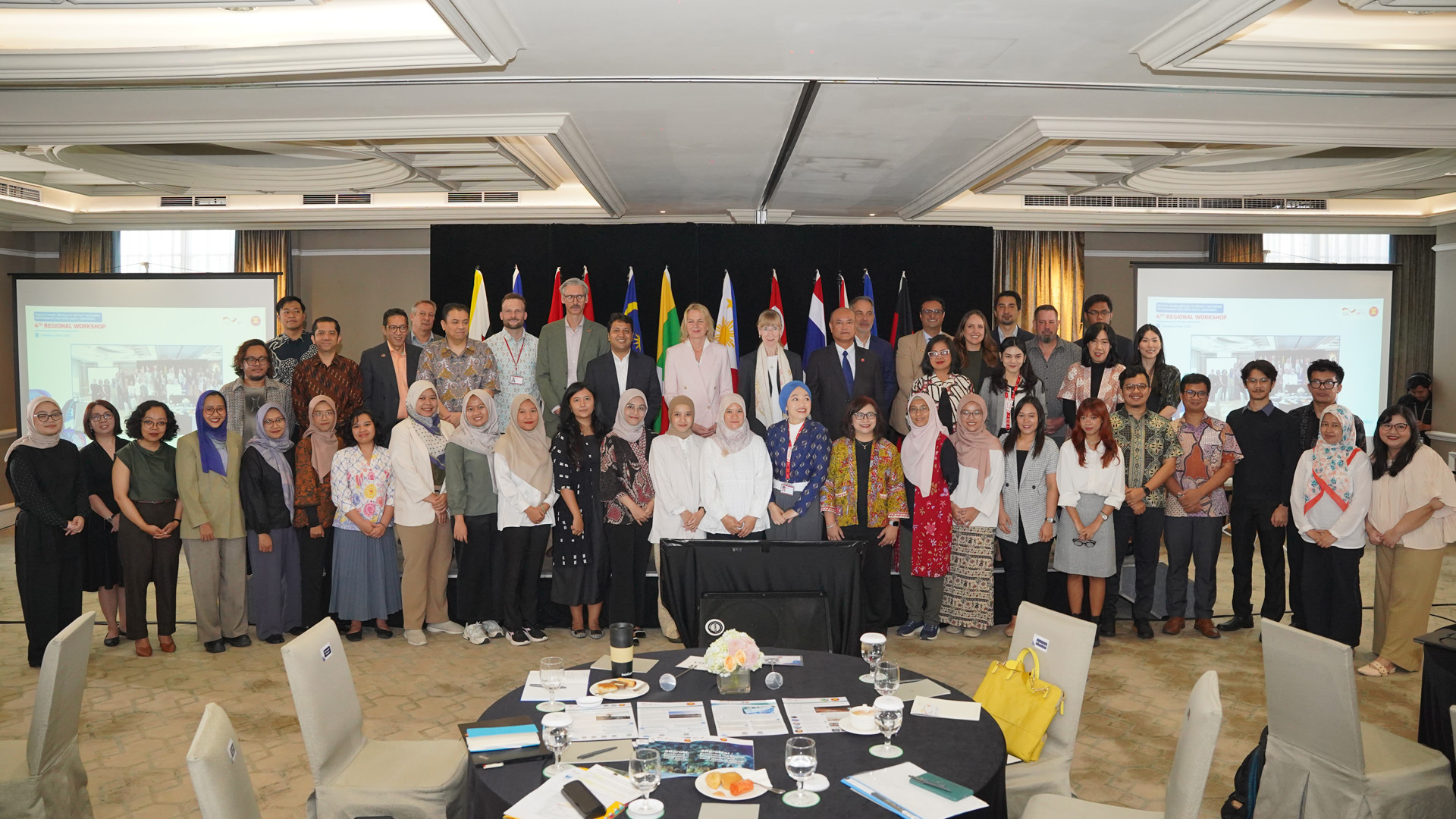
AIT-RRCAP Highlights Regional Knowledge Leadership at 4th 3RproMar Workshop
Indonesia

The Asian Institute of Technology - Regional Resource Centre for Asia and the Pacific (AIT-RRCAP) played an active role at the 4th Regional Workshop of the ASEAN-German 3RproMar Project, held on 6 May 2025 in a hybrid format with participants joining from Jakarta, Phnom Penh, Quezon City, and Viet Nam.

Representing AIT-RRCAP, Mr. Bishal Bhari contributed to the panel discussion on regional-level achievements and lessons learned, showcasing the role of the Know Waste Knowledge (KWK) Platform in advancing harmonized data sharing, policy resources, and capacity-building for ASEAN Member States. The KWK Platform has been instrumental in promoting good practices and supporting evidence-based interventions to tackle marine litter and plastic pollution challenges across the region.

The workshop, themed “Sustaining Impact: Results and Lessons from 3RproMar Implementation,” provided a platform for reviewing progress made under the first phase of the 3RproMar project, while introducing priorities for its next phase (2026–2028), which will focus on strengthening regional cooperation, scaling sustainable business models, and enhancing gender-responsive circular economy frameworks.

AIT-RRCAP reaffirmed its commitment to advancing knowledge partnerships, working with ASEAN colleagues, and contributing to the achievement of the Regional Action Plan for Combating Marine Debris through future joint initiatives.

Start Reading →
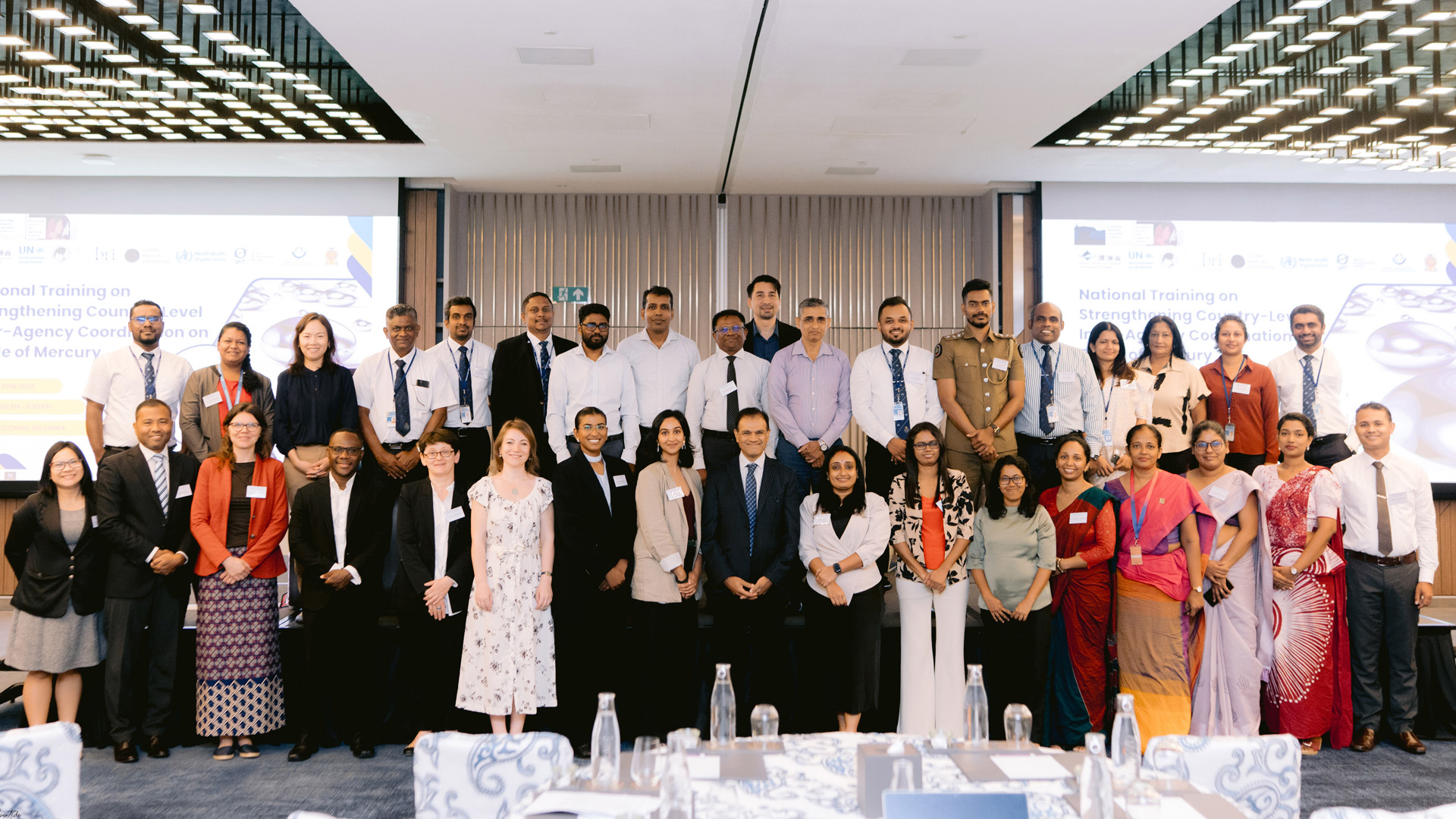
National Workshop on Strengthening the Elimination of Mercury-added Skin-lightening Products in Sri Lanka
Sri Lanka

The workshop was organized on 2 June 2025 in Colombo, bringing together participants from Sri Lanka Customs, the Central Environmental Authority, the Consumer Affairs Authority, the Atomic Energy Board, the Ministry of Health, and other key agencies. Titled National Training on Strengthening Country-Level Inter-Agency Coordination on Trade of Mercury, the workshop was co-organized by the Ministry of Environment of Sri Lanka, United Nations Environment Programme (UNEP), World Health Organization (WHO), the Biodiversity Research Institute (BRI), and the Regional Resource Centre for Asia and the Pacific at the Asian Institute of Technology (AIT RRC.AP).

The training responded to the growing threat of mercury trafficking and the continued illegal trade of mercury-added products including skin-lightening products, despite bans under the Minamata Convention. The workshop emphasized the critical role of customs and environmental authorities in enhancing enforcement and border controls through improved coordination and technical training.

Sessions covered practical aspects of mercury trade enforcement, including shipment profiling, customs inspection, use of X-ray fluorescence (XRF) analyzers, and case studies. Presentations by UNEP, WHO, WCO, and national institutions highlighted gaps in enforcement, data sharing, and surveillance capacity. Hands-on exercises provided real-time experience in mercury detection, seizure handling, and inter-agency response planning.

The training concluded with a consensus on the importance of formalizing inter-agency coordination mechanisms, scaling up technical capacities, and strengthening post-market surveillance and consumer protection measures. ??

Start Reading →
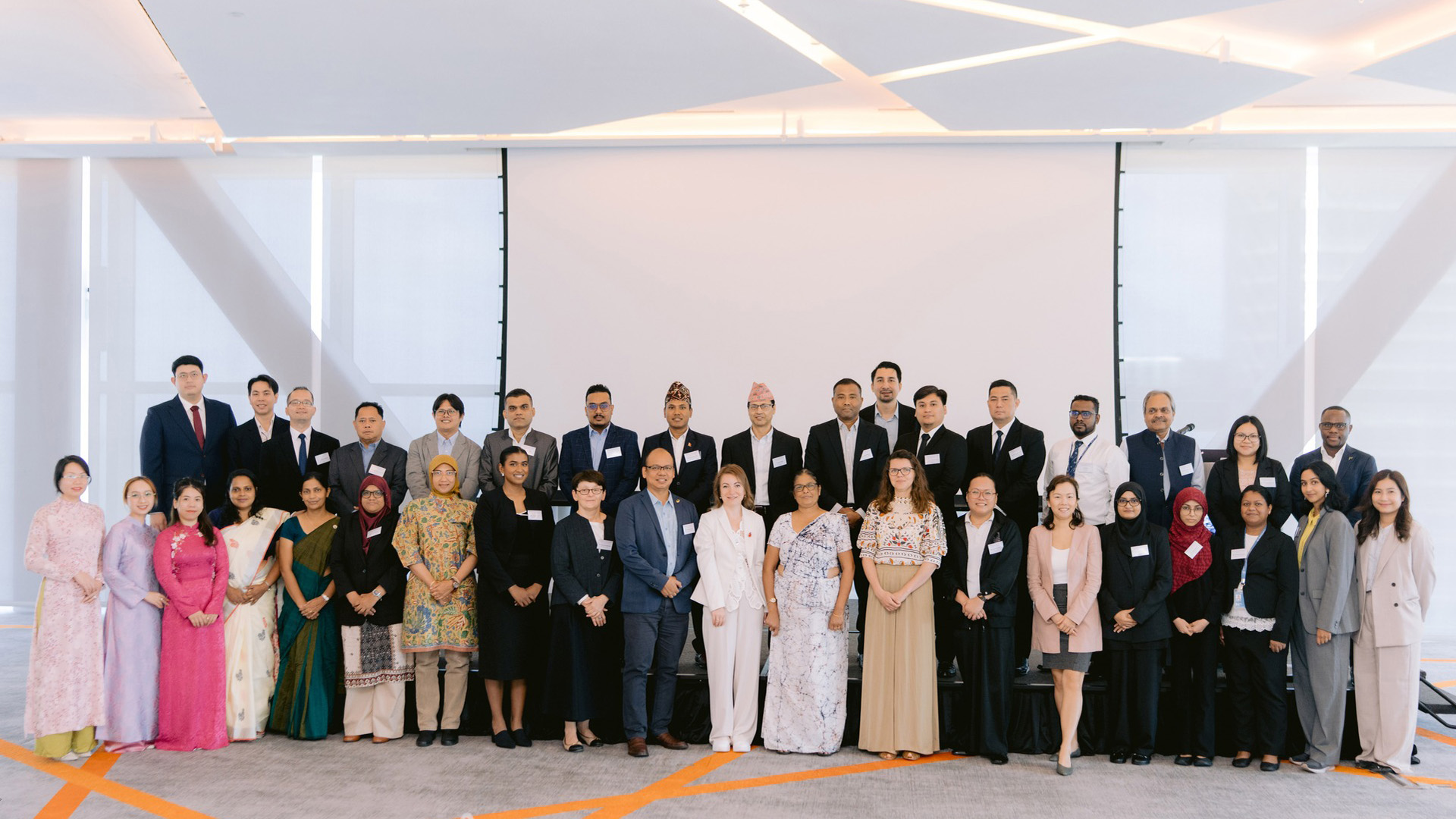
Sub-regional Workshop on Strengthening Inter-agency Coordination for Eliminating Mercury-added Skin-lightening Products
Sri Lanka

The workshop was co-organized by the Ministry of Health of Sri Lanka, United Nations Environment Programme (UNEP), World Health Organization (WHO), the Biodiversity Research Institute (BRI), and the Regional Resource Centre for Asia and the Pacific at the Asian Institute of Technology (AIT RRC.AP). The event aimed to strengthen institutional coordination and national implementation of the Minamata Convention’s provisions related to mercury-added skin-lightening products (SLPs).

?????Delegates (from Sri Lanka, Thailand, Philippines, Malaysia, Indonesia, Vietnam, Nepal, and Maldives) discussed key regulatory and enforcement challenges such as fragmented institutional roles, limited coordination between agencies, and inadequate testing capacities at entry points. The need for targeted communications, and stricter controls on informal and online sales channels were also underscored.

?Over the two days, participants engaged in technical sessions and group work on national coordination mechanisms, real-time detection tools such as XRF analyzers, case study presentations, and a practical exercise to simulate inter-agency response. Country presentations offered insights into progress made and identified gaps requiring joint solutions.

The workshop stressed the need for formal inter-agency coordination mechanisms, scaling up product testing and post-market surveillance. The event reaffirmed that cross-sector collaboration is essential to eliminate mercury-added SLPs and to protect public health and consumer rights across South Asia.?

Start Reading →
RRCAP

The Regional Resource Center for Asia and the Pacific supports sustainable development and knowledge sharing on waste and marine debris management across the region.

Quick Links
  • About
  • Marine Debris
  • News
Marine Debris
  • Data
  • Policy
  • Good Practices
Keep in touch

Follow us on social media

©All rights reserved 2026.